Tuesday, July 26, 2011

"Core Curriculum, Writings on Photography" by Tod Papageorge


It is humbling to be reviewing the book of such a brilliant writer on photography as Tod Papageorge. Well known as a photographer and teacher of photography (he has held the Walker Evans chair at Yale since 1979), Core Curriculum, Writings on Photography(Aperture, 2011) presents Papageorge's collected essays from the last 35 years in one volume. As Papageorge himself declared at a recent reading and book signing, he does not consider himself primarily to be a writer, and the relatively small output offered here would seem to bear this out. However, what is perhaps a low quantity of words for the time span represented is nonetheless dense in quality. Papageorge is an immensely profound thinker on the subject of photography, and a keen and opinionated observer of the photography scene, perhaps second only to the late John Szarkowski of the Museum of Modern Art in his insight and originality. It is not only his wisdom which keeps us engaged in the text, but his well crafted language is also a pleasure to read (this makes sense: Papageorge began his academic career as an English literature major before becoming enthralled with photography). Many of the writings will be familiar: (his essay for The Snapshot (Aperture #19:1), the introduction to Garry Winogrand's Public Relations and his treatise for Walker Evans and Robert Frank: An Essay on Influence, for example); they are all welcomed re-reading in this new context. There are also many newly published entries, including impassioned tributes to the photographers Atget, Brassai, Cartier-Bresson, Winogrand and Koudelka (with many plates of the referenced pictures), several sharp interviews with Papageorge himself, and my personal favorite, "An Unfinished Poem in Response to Susan Sontag's On Photography". Unlike writers such as Sontag, who seem to have contempt for the medium, Papageorge postulates in one interview that the best writing about photography has been penned by those involved in its actual practice, giving Szarkowski and Robert Adams as illustrations. With his deep understanding and love for photography, I would add Tod Papageorge to that pantheon.

Man and Eye Chart, Central Park, New York, 1989
© Tod Papageorge
Tod Papageorge Book Signing,
Aperture Gallery, NYC, 6/29/2011
© Robert Forlini

Friday, June 24, 2011

"Henry Wessel, Vintage Photographs" Exhibit at Pace/MacGill Gallery

San Francisco, 1973
© Henry Wessel
Henry Wessel is a photographer of talent whose work is not seen often enough in exhibitions or in print. So it is most welcome that now on view at Pace/MacGill Gallery in New York City is "Henry Wessel, Vintage Photographs" through July 8, 2011. Wessel, who has been photographing primarily in the American West since the 1960's, has the rare quality of being able to make pictures which perfectly blend both visual beauty and wry social commentary. No matter how diverse his subject matter, Wessel's work maintains a stylistic cohesion that marks the work as uniquely his own. Garry Winogrand once stated that the contention of content threatening to overwhelm form in his own pictures was what created their tension. The obverse is true in Wessel's photographs; it is the form which threatens to overpower the content. The art of Wessel's pictures is the delicate balance between these elements, teetering on the edge of formalism, yet always managing to draw us back to the significance of their meaning. They are simultaneously a celebration of the joys of seeing and and a commentary on the strange world which surrounds us.
Dog Show, Oakland, 1981 © Henry Wessel
Walapai, Arizona, 1971 © Henry Wessel

Click image to play video of a Henry Wessel interview.

Thursday, June 16, 2011

Work in Progress, June 2011

This installment of Work in Progress features a selection of new photographs shot in and around New York City in April and May 2011.
Hasidic Family, Midtown Manhattan, 2011  © Robert Forlini

Cell Phone Photographer, Cinco de Mayo, Peekskill, NY, 2011  © Robert Forlini
Pharmacy, Chinatown, NYC, 2011 © Robert Forlini
Crossing Canal Street, NYC, 2011  © Robert Forlini
Father and Son, Cinco de Mayo, Peekskill, NY, 2011  © Robert Forlini
Photographer, New York Auto Show, NYC, 2011  © Robert Forlini
Overgrown House, Lake Peekskill, NY, 2011  © Robert Forlini
Garden, Lake Peekskill, NY 2011  © Robert Forlini
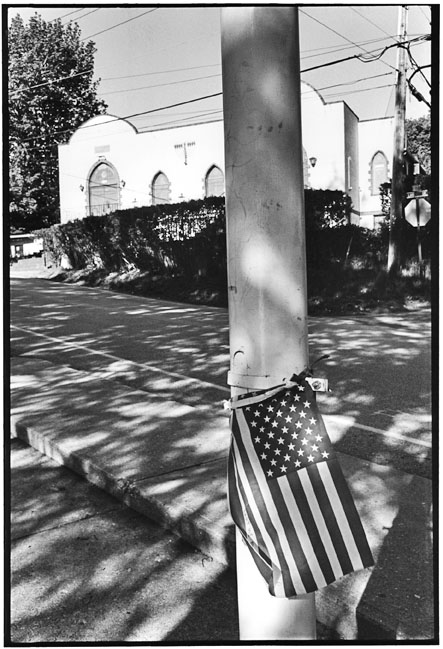
Flag, Lake Peekskill, NY, 2011  © Robert Forlini
Anne Reading Magazine, Croton-on-Hudson, NY, 2011 © Robert Forlini

Saturday, April 23, 2011

"DINNER", A Photo Exhibition at Umbrella Arts, NYC

Elijah and Ashley's Wedding, Murfreesboro, TN, 2009
© Robert Forlini
I will be exhibiting two photographs in a forthcoming exhibition entitled "DINNER" at Umbrella Arts Gallery in New York City. To quote from the show's description, "From casual meals to gourmet banquetsDINNER is part of our daily lives. Whether we celebrate it or just tolerate it, we can’t do without it. We plan greatly for it, or grin and bear it. It’s a ritual, whether eating on the run or at the dinner table, alone or with friends and family. We romance and socialize around it, worry about it, prepare for it, dread it, or try to ignore it. We study recipes, look through fancy restaurant windows in envy, are hungry for the next DINNER, wonder if we can afford it." The show was juried by photographer Harvey Stein, who selected my pictures Elijah and Ashley's Wedding, Murfreesboro, TN, 2009 and Backyard Supper, Yonkers, NY, 1989 for inclusion in the show.

  • The exhibition will run from May 19 to June 18, 2011.
  • There will be an Opening Reception on Thursday, May 19 from 6:00-8:00 PM.
  • Gallery Hours are: Thursday-Saturday, 1:00-6:00 PM and by appointment.
  • The gallery is located at 317 East 9th Street, New York, NY 10003, and can be contacted at (212) 505-7196 or at info@umbrellaarts.com
Backyard Supper, Yonkers, NY, 1989  © Robert Forlini

Saturday, April 16, 2011

Work in Progress, April 2011

In this new feature of my blog, I will be presenting photographs which I am currently editing and printing, appearing here for the first time before they are posted to my website. Since this is truly "work in progress", I am especially welcoming and appreciative of comments and feedback. This selection is from Chinatown and the Metropolitan Museum of Art in New York City.
Crowd, Chinatown, NYC, 2011   © Robert Forlini
Woman Walking, Chinatown, NYC, 2011  © Robert Forlini
Couple, Chinatown, NYC, 2011  © Robert Forlini
Fish Market, Chinatown, NYC, 2011 © Robert Forlini
Family, Chinatown, NYC, 2011 © Robert Forlini
Man Looking at Statue, Metropolitan Museum, NYC, 2011
© Robert Forlini
Nuns and Painting, Metropolitan Museum, NYC, 2011 © Robert Forlini

Tuesday, March 22, 2011

"Steiglitz, Steichen, Strand" Exhibition at the Metropolitan Museum of Art

Alfred Steiglitz, The Terminal, 1893
The exhibition, "Steiglitz, Steichen, Strand", on view at the Metropolitan Museum of Art in New York through April 10, 2011, presents the work of three pioneers of Modern photography at the turn of the 20th Century. While not a comprehensive survey of the innovations of these artists, the show does succeed in capturing the spirit and significance of their respective accomplishments. Alfred Steiglitz (1864-1946) was the charismatic elder statesman of the group, a photographer and art dealer who championed the acceptance of photography as an art form and introduced many emerging European painters to the United States through his galleries. Edward Steichen (1879-1973) was an early disciple of Steiglitz and a master craftsman who experimented with many methods to achieve his artistic vision, including early color processes. Both at first worked in the Pictorialist style, which attempted to gain legitimacy by obscuring photography's detail and sharpness through imitating the conventions of painting, softening the image with focus and printing techniques. Steiglitz, in part influenced by the European art he was showing, eventually grew tired of this fashion and sought a new and fresh approach. Enter the youngest member of this triumvirate, Paul Strand (1890-1976). On advice from Steiglitz, Strand went forward and created a body of work which exploited photography's hard edges and sharp focus into a new, purely photographic and modern statement. Strand was also a socially conscious artist (he had studied with Lewis Hine at the Ethical Culture School), and he included more human content in his work. Steiglitz embraced this new style, showing Strand's work at his "291" Gallery and publishing it in the lush Camera Work journal. These collaborations and cross influences heralded the inception of Modern photography. For me, it is Strand who emerges from this exhibition as the foremost visionary. In the hindsight of a century passed, his pictures remain as timeless and relevant as any great work of art.
Edward Steichen, Rodin-The Thinker, 1902

Paul Strand, Blind, 1916

Sunday, March 20, 2011

"Black and White" Is Vermont PhotoPlace Gallery's New Online Exhibit

Ice Skating, Lake Peekskill, NY 2004     ©Robert Forlini
My photograph, Ice Skating, Lake Peekskill, NY 2004, has been selected by juror Dan Burkholder, to appear in and exhibition entitled "Black and White" at Vermont PhotoPlace Gallery's Online Gallery Annex. To quote from the juror's statement,   "
The images thrust me onto another plane of appreciation for those practitioners who have honed their vision into shades of gray, embracing one of photography’s earliest and most honored ways of expressing the photographic image...t
he black and white photograph distills our range of perception, forcing a contemplation of the shapes, the light, and the stories behind the image before us...
 Put simply, it’s magical!" In addition, the picture will be published in an exhibition catalog which will be available through the gallery web site.